
IC Forklift vs. Electric Forklift: Which Is Better for Your Operation
Release time: 2026-10-12
Table of Contents
Choosing between an internal combustion (IC) forklift and an electric forklift depends on more than the initial purchase price. Load requirements, operating hours, working environment, energy costs, and maintenance resources all affect which machine delivers better value over its service life.
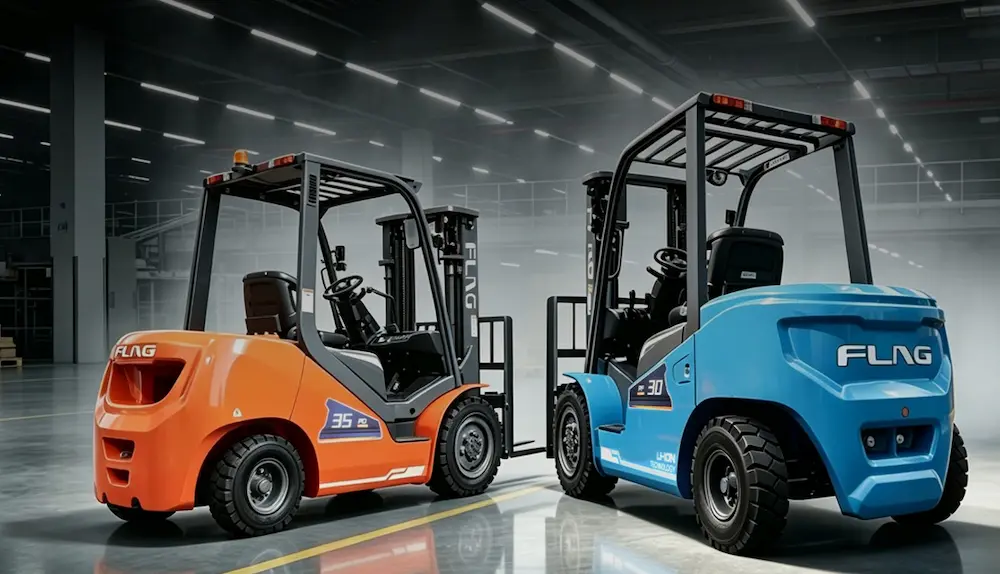
For warehouse operators, distributors, and industrial buyers, the decision often comes down to matching the forklift to the conditions in which it will work. Diesel forklifts can be practical for demanding outdoor applications and extended shifts, while electric models are often well suited to indoor material handling and operations where exhaust emissions and noise need to be minimized.
Understanding these differences helps buyers select the right equipment for their facilities rather than paying for capabilities they do not need.
IC Forklift vs. Electric Forklift: Key Differences
IC forklifts use an internal combustion engine powered by diesel, gasoline, or LPG, depending on the model. Electric forklifts use rechargeable batteries to power their drive and lifting systems. These different power sources affect operating costs, maintenance requirements, and suitable working environments.
| Selection factor | IC forklift | Electric forklift |
|---|---|---|
| Typical applications | Outdoor yards, industrial sites, loading areas, and demanding material handling | Warehouses, distribution centers, manufacturing facilities, and indoor handling |
| Energy source | Diesel, gasoline, or LPG, depending on configuration | Rechargeable battery |
| Indoor air quality | Exhaust emissions require careful consideration of ventilation and local regulations | No tailpipe exhaust emissions during operation |
| Noise | Generally louder because of the engine | Generally quieter during operation |
| Refueling or charging | Refueling can be relatively quick when fuel is available | Requires charging time or a suitable battery management plan |
| Maintenance | Engine, fuel, cooling, and transmission systems may require servicing | Battery, electrical, drive, and hydraulic systems require maintenance |
| Operating cost | Depends on fuel prices, utilization, maintenance, and efficiency | Depends on electricity prices, charging efficiency, battery life, and utilization |
These are general comparisons, not guarantees for every model. Actual performance depends on the forklift's design, load, duty cycle, operating environment, and maintenance history.
When Is an IC Forklift the Better Choice?
An IC forklift may be a practical option when operations involve outdoor handling, frequent movement between work areas, or demanding working conditions. Diesel models are commonly considered for construction materials, industrial yards, heavy goods, and loading or unloading in areas where indoor air quality is less of a concern.
Outdoor Work and Demanding Operating Conditions
Outdoor operations may expose forklifts to uneven surfaces, dust, changing weather, and extended periods of use. The appropriate IC forklift should be selected according to ground conditions, tire type, load capacity, and the intensity of daily operations.
Diesel counterbalance forklifts are worth considering when handling pallets, industrial components, building materials, or other loads in outdoor yards. However, buyers should verify the machine's rated capacity at the required load center rather than selecting equipment based on tonnage alone.
Longer Shifts and Refueling Requirements
Facilities operating multiple shifts may value the ability to refuel a diesel forklift quickly, provided fuel is readily available and the site has appropriate storage and handling procedures.
This can reduce interruptions associated with battery charging. However, diesel fuel costs, engine servicing, emissions requirements, and operator comfort should also be included when calculating total operating expenses.
For buyers sourcing from a diesel counterbalance forklift manufacturer, it is useful to compare rated capacity, engine specifications, lifting height, transmission configuration, tire options, and the availability of replacement parts. These details help determine whether a particular model suits the intended workload.
Choosing a 3.0-Ton or 3.5-Ton Diesel Forklift
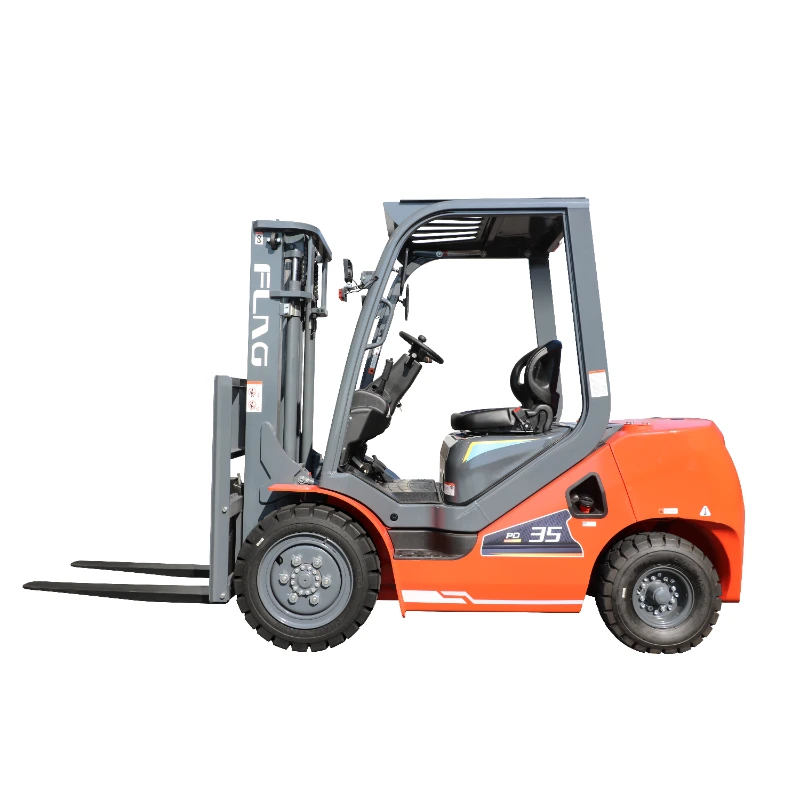
A 3.0-ton or 3.5-ton diesel forklift may suit businesses that regularly handle medium-to-heavy palletized goods, industrial materials, or bulky loads. The right choice depends on the actual weight and dimensions of the goods, the load center, the required lifting height, and the available operating space.
A 3.0 T/3.5 T diesel forklift for material handling should be evaluated against the rated load capacity shown on the forklift's data plate and capacity chart. If the load is unusually long, its center of gravity may shift forward and reduce the safe lifting capacity.
Buyers should also check mast height, turning radius, tire configuration, overhead clearance, and ground conditions. A higher-capacity forklift is not automatically the better choice if it cannot maneuver efficiently through the facility.
When Does an Electric Forklift Make More Sense?
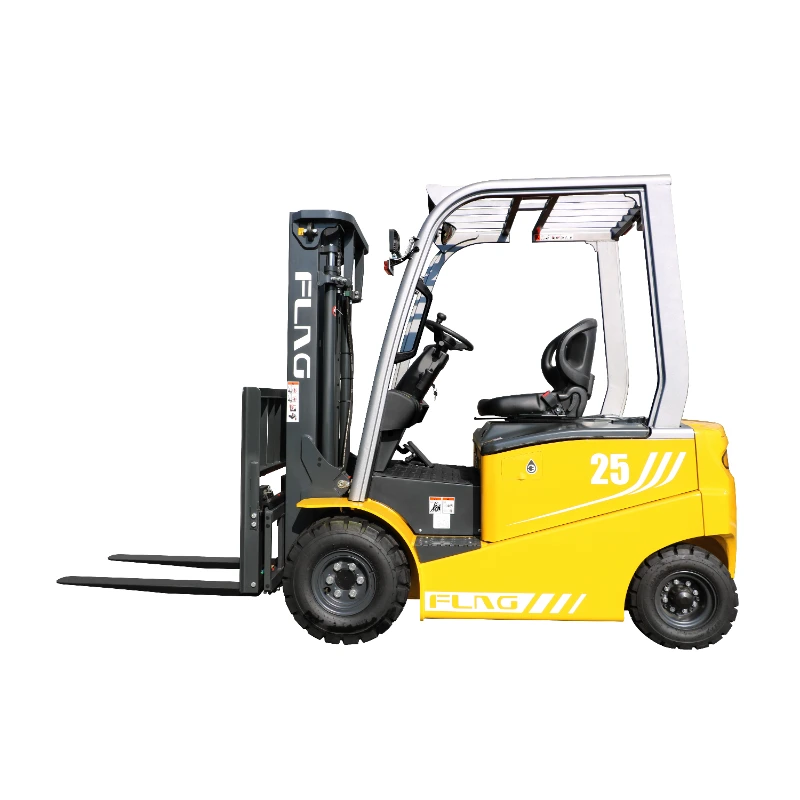
Electric forklifts are widely used in indoor material handling because they produce no tailpipe exhaust emissions during operation and generally generate less operating noise than comparable combustion-engine models.
Warehouses and Indoor Facilities
In warehouses, food distribution facilities, retail logistics centers, and manufacturing plants, exhaust emissions and ventilation can be important considerations. An electric forklift can help reduce direct exhaust emissions in the working area, although the facility must still follow applicable workplace safety and ventilation requirements.
Electric models may also be suitable for operations that require frequent starts, stops, and precise maneuvering in aisles. Buyers should check turning radius, overall width, mast configuration, and load capacity at the required lifting height before selecting a model.
Battery Runtime and Charging Planning
Battery performance is one of the most important considerations when choosing an electric forklift. The operating time available between charges depends on battery capacity, load weight, lifting frequency, travel distance, ambient temperature, and the condition of the battery.
Before purchasing, estimate the number of operating hours per shift and identify when the forklift can be charged. A single-shift warehouse may have enough downtime for routine charging, while a multi-shift facility may need additional batteries, suitable charging infrastructure, or a model designed for its duty cycle.
Buyers comparing suppliers should ask about battery chemistry, charging time, expected service life, charger compatibility, and battery replacement costs. These factors can have a substantial effect on long-term ownership costs.
Working With an Electric Forklift Factory
When sourcing from an electric forklift factory, buyers should evaluate more than the quoted unit price. Confirm the available load capacities, battery options, mast configurations, charger specifications, safety features, and customization possibilities.
For fleet purchases, it is also important to clarify warranty coverage, technical support, spare parts availability, and service arrangements in the destination market. If the forklifts will operate across multiple shifts, ask the supplier to help assess whether the proposed battery configuration matches the planned duty cycle.
Compare Total Cost of Ownership, Not Just Purchase Price
The initial price does not tell the whole story. An IC forklift and an electric forklift may have different cost profiles over several years of operation.
| Cost factor | IC forklift | Electric forklift |
|---|---|---|
| Energy | Fuel consumption and local fuel prices | Electricity consumption and charging efficiency |
| Routine maintenance | Engine oil, filters, fuel system, and other mechanical components | Battery care, electrical systems, drive components, and hydraulic servicing |
| Major component replacement | Engine or transmission repairs may be significant | Battery replacement can be a major expense, depending on battery type and usage |
| Operating downtime | Affected by servicing, repairs, and fuel availability | Affected by charging schedules, battery condition, and charging infrastructure |
| Facility requirements | Appropriate fuel handling, ventilation, and emissions compliance | Suitable charging area, electrical supply, and battery safety procedures |
To compare costs fairly, estimate annual operating hours, expected energy consumption, maintenance expenses, and the likely service life of the equipment. Include the cost of charging equipment or fuel infrastructure where applicable.
For electric forklifts, battery replacement should be considered over the planned ownership period rather than assumed to be an immediate expense. For diesel models, fuel consumption and engine maintenance should be estimated using realistic working conditions.
The best option is the one that meets the operational requirements at an acceptable total cost—not necessarily the forklift with the lowest purchase price.
How to Choose the Right Forklift for Your Operation
Before requesting a quotation, buyers should establish a few basic requirements:
- Load capacity: Determine the heaviest load, its dimensions, and its center of gravity.
- Lifting height: Check the required lift height, mast type, and overhead clearance.
- Working environment: Identify whether the forklift will operate indoors, outdoors, or in both settings.
- Daily utilization: Estimate operating hours per shift, travel distance, and lifting frequency.
- Energy arrangements: Assess fuel availability or battery charging capacity.
- Maintenance support: Confirm access to qualified technicians, spare parts, and warranty service.
- Safety requirements: Review applicable workplace regulations, operator training needs, and equipment safety features.
These requirements will help narrow the options before comparing individual models. They also give suppliers the information needed to recommend a suitable configuration.
Find the Right Forklift with FLAG Forklift
There is no single power type that suits every material handling operation. IC forklifts may be better suited to certain outdoor and demanding applications, while electric forklifts can be a strong choice for indoor operations where exhaust emissions, noise, and charging arrangements are important considerations.
FLAG Forklift can be considered as part of your supplier evaluation when comparing forklift options for your operation. Share your required load capacity, lifting height, working environment, daily operating hours, and destination market to help identify suitable equipment.
Request specifications and a quotation based on your actual working conditions so you can compare forklift options more accurately.