
How to Choose an Electric Forklift for Warehouse Operations
Release time: 2026-10-21
Table of Contents
Choosing the right electric forklift involves more than selecting a model with sufficient lifting capacity. Warehouse layout, pallet dimensions, lifting height, daily operating hours, and battery performance all affect how efficiently a forklift can handle materials.
For warehouse managers, distributors, and equipment buyers, the goal is to match the forklift to the actual workflow. A machine that performs well in a spacious distribution center may not be suitable for a facility with narrow aisles, high storage racks, and frequent pallet movements.
When evaluating electric forklifts as part of your warehouse equipment requirements, consider the following factors before comparing models and requesting quotations.
Assess Your Warehouse Layout and Material Handling Needs
Start by reviewing how goods move through the facility. The right forklift should fit the available space, handle the required loads, and support the movement of materials between receiving areas, storage racks, production lines, and dispatch zones.
Check Aisle Width and Turning Space
Warehouse aisle width directly affects forklift maneuverability. A forklift that is too large for the available space may require wider aisles, reduce storage density, or make pallet handling more difficult.
Measure the narrowest aisles, turning areas, loading zones, and access points. Also consider pallet dimensions and the space required to approach and retrieve loads from racks.
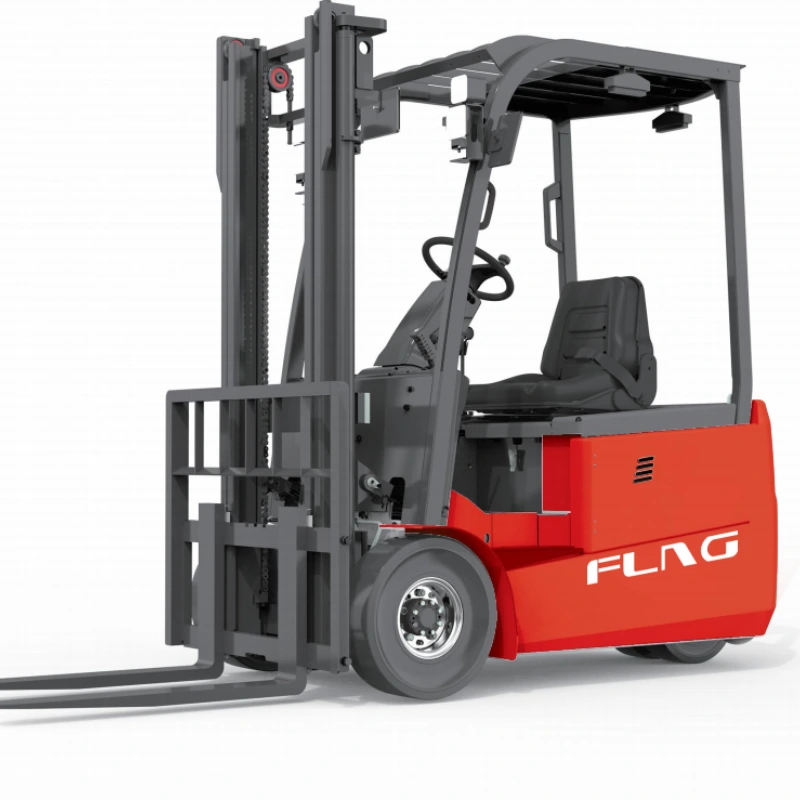
A 3-wheel electric forklift may be worth considering when maneuverability is a priority in relatively confined indoor spaces. However, the suitability of a particular model depends on its dimensions, turning radius, load capacity, and operating conditions. Check the manufacturer's specifications against your warehouse layout rather than assuming that every three-wheel model can work in narrow aisles.
Match the Forklift to Your Daily Workload
A warehouse handling a few pallets per hour has different requirements from a distribution center operating continuously across multiple shifts.
Estimate the number of pallets moved per shift, average travel distances, lifting frequency, and time spent waiting or queuing. These details help determine the required performance and battery capacity.
For frequent pallet movements over longer distances, travel speed and energy consumption may be important. For operations involving repeated loading and unloading, lifting performance, visibility, and operator comfort may have a greater effect on productivity.
Choose the Right Load Capacity and Lifting Height
Selecting the correct capacity is essential for safe and efficient material handling. Buyers should consider both the weight of the load and the height at which it must be lifted.
Calculate the Actual Load Requirement
Identify the heaviest pallet or load the forklift will handle during normal operations. Include the dimensions of the goods and any attachments that may affect the forklift's rated capacity.
A forklift's nominal capacity does not necessarily remain available at every lifting height or load center. Long, bulky, or unevenly distributed loads can change the machine's load characteristics.
Before purchasing, review the capacity plate and load chart for the intended configuration. If the operation requires special attachments, confirm how they affect the rated capacity.
Select a Suitable Mast Configuration
The required lifting height depends on rack height, pallet placement, and overhead clearance. A forklift must be able to lift loads to the highest storage position while remaining suitable for the building's doorways, ceiling height, and other restrictions.
When comparing electric counterbalance forklifts, check:
- Maximum lifting height and lowered mast height
- Free lift requirements, where relevant
- Overall mast height and overhead clearance
- Rated capacity at the required lifting height
- Visibility through the mast during pallet placement
These specifications are particularly important in warehouses with high racks or limited vertical clearance.
Compare Electric Forklift Types for Warehouse Applications
Different forklift configurations suit different warehouse layouts and material handling tasks. The choice should reflect the load requirements, available space, and the way materials are stored and moved.
| Forklift type | Potential advantages | Key considerations |
|---|---|---|
| 3-wheel electric forklift | Maneuverability in suitable indoor applications | Load capacity, turning radius, stability, and floor conditions |
| 4-wheel electric forklift | A configuration worth evaluating for operations that prioritize stability and broader handling requirements | Overall dimensions, aisle width, load chart, and turning space |
| Electric counterbalance forklift | Handles palletized loads without requiring support legs beneath the load | Counterweight clearance, aisle layout, load capacity, and mast configuration |
A 4-wheel electric forklift may be suitable for warehouses that need to handle heavier loads or require a configuration designed around stability and regular pallet handling. However, wheel count alone does not determine a forklift's stability or performance. Actual specifications and the manufacturer's load chart should guide the decision.
An electric counterbalance forklift can be useful when pallets must be picked up directly from the floor, loading docks, or storage locations without the support-leg arrangement used by some other material handling machines. Buyers should still confirm that the truck can maneuver safely within the available operating space.
Evaluate Battery Runtime and Charging Requirements
Battery performance affects how consistently an electric forklift can support warehouse operations. A model with adequate lifting capacity may still be unsuitable if its battery cannot meet the required working schedule.
Estimate the Required Operating Time
Battery runtime depends on more than the battery's stated capacity. Load weight, travel distance, lifting frequency, acceleration, operating temperature, and battery condition all influence energy consumption.
Review the expected working hours per shift and the intensity of use. If the forklift will operate intermittently, planned charging breaks may be sufficient. For continuous or multi-shift operations, you may need a different battery configuration, additional charging capacity, or a suitable battery replacement strategy.
Check Charging Time and Battery Compatibility
Before selecting an electric forklift, ask the supplier to clarify the battery type, rated capacity, compatible charger, charging time, and recommended charging practices.
Also consider where charging equipment will be installed and whether the electrical supply can support the planned fleet. Battery safety, ventilation requirements where applicable, and manufacturer instructions should be incorporated into the charging area design.
Do not compare battery capacity figures in isolation. A meaningful comparison considers the expected runtime under your operating conditions and the time required to return the forklift to service.
Consider Warehouse Floor Conditions and Operator Safety
Electric forklifts are often used indoors, but not every warehouse floor presents the same operating conditions. Surface quality, gradients, joints, ramps, and changes between indoor and outdoor areas can affect traction, comfort, and performance.
Inspect the routes the forklift will travel and confirm that the selected model is suitable for the floor conditions. Tire type should also match the surface and operating environment.
Operator visibility is another important consideration. The mast, load, and attachments can obstruct the operator's view, especially when handling tall or bulky pallets. Check the seating position, control layout, mirrors or cameras where fitted, lighting, warning devices, and other relevant safety features.
Warehouse operators should also establish clear pedestrian routes, speed limits, load-handling procedures, and charging practices. Equipment selection works best when combined with appropriate training and workplace safety controls.
Compare the Total Cost of Electric Forklift Ownership
The purchase price is only one component of the overall investment. Buyers should compare expected costs over the planned service life rather than choosing solely on the lowest quotation.
Important cost factors include:
- Electricity consumption: Estimate energy use based on expected operating hours and local electricity rates.
- Battery costs: Consider battery service life, replacement requirements, and charging efficiency.
- Maintenance: Review routine servicing, tire replacement, hydraulic maintenance, and electrical system support.
- Downtime: Consider how charging schedules, repairs, and spare parts availability affect warehouse productivity.
- Supplier support: Check warranty terms, technical assistance, and access to replacement parts in your market.
When evaluating suppliers, ask for comparable specifications and clarify what each quotation includes. Differences in battery configuration, mast height, attachments, warranty coverage, and delivery arrangements can make apparently similar offers difficult to compare.
How to Select the Right Electric Forklift for Your Warehouse
Before finalizing a purchase, prepare a clear specification based on your actual material handling needs.
Confirm the maximum load weight, required lifting height, pallet dimensions, narrowest aisle width, daily operating hours, and expected charging arrangements. Then compare candidate forklifts using their technical specifications and rated capacity charts.
It is also worth reviewing the supplier's ability to provide suitable configurations, spare parts, and after-sales support. These factors become particularly important when purchasing multiple forklifts or planning to operate the equipment over several years.
FLAG Forklift offers a starting point for evaluating forklift options for warehouse operations. Share your load capacity requirements, lifting height, aisle dimensions, operating schedule, and destination market to identify equipment that fits your application.
Contact FLAG Forklift to discuss your warehouse requirements and request specifications for suitable electric forklift models.